PANTANAL: the vulnerable floodplain of South America
In the heart of South America, in the Mato Grosso region, is located the largest marsh area in the world: the Pantanal, a veritable treasure of biodiversity.
With its 230 thousand square kilometers of extension it borders with Brazil, Bolivia and Paraguay: in addition to having conquered the distinction (record?) of being the widest alluvial plain, it is also the third largest environmental reserve on Earth. It is considered the "Ecosystem for excellence", with the largest number of flora and fauna species in terms of biomass.
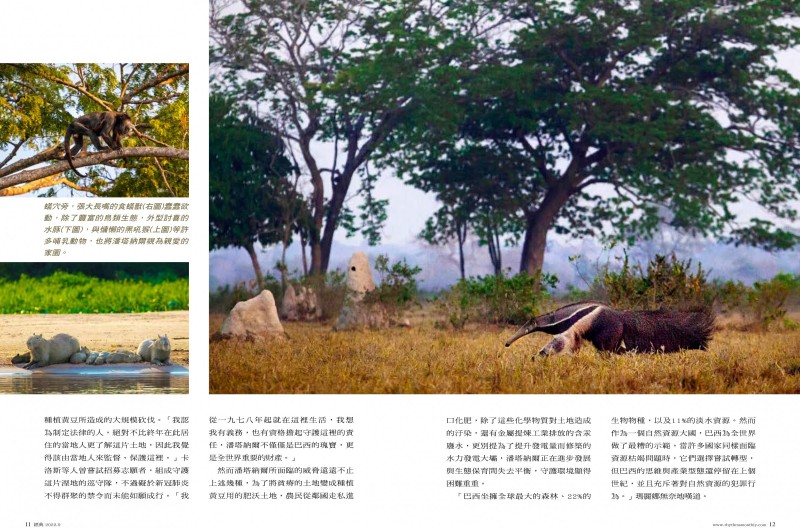
Here animals such as the jaguar, the hyacinth macaw, the caiman, the capybara, the giant anteater and the anaconda, just to name a few, find refuge, as well as hundreds of other different types of living beings.
From a naturalistic point of view, this biome is characterized by the mixture of savannah here called Cerrado, rainforests, dry forests, rivers and lakes.
By virtue of this remarkable environmental variety, it is one of the best places in the world for spotting wildlife: "in the Amazon the sounds of nature can be heard - explains the Brazilian ornithologist Braulio A. Carlos - in the Pantanal they can be seen".
Three important Brazilian biomes influence it and are interconnected: the Amazon Rainforest, the Cerrado and the Atlantic Forest. In particular, the Amazon forest has a direct relationship with this place and it is evident in the phenomenon of "rios viadores", the so-called "flying rivers":
fueled by the transpiration of plants from the Amazon rainforest, this aerial river network carries more water than the Amazon River normally does and flows into the vast swampy area of the Pantanal, bringing water to agricultural regions in southern Brazil and northern Argentina.
"It is an invaluable resource for the populations of these areas and for the environment on which they depend - explains Marina Silva, Brazilian politician and environmentalist - the continuous deforestation of the Amazon, in addition to the most evident damage, creates a reduction in these particular courses of water that few are aware of. Their reach has already been greatly reduced and if we add the cutting of trees, necessary to create new land for pastures and for intensive soybean agriculture, together with the severe climate changes responsible for prolonged droughts, the result is that of a very Pantanal drier and more vulnerable."
The inhabitants of these land are the Pantaneiros: they have lived for generations in harmony with the wild nature of this place, raising cattle extensively. Their close working companions are horses, thanks to which they manage the herds even in periods of flooding.
The one that has been bred here for over three hundred years is an endemic breed of cattle now considered endangered. “This breed derives from Spanish cattle brought to the Americas by the conquistadors at the time of the colonization of the Río de la Plata basin - says the ornithologist Braulio - it is a small breed with short hair, brown with a tendency to lighten on the back. It adapts well to the extreme climatic conditions of the region, characterized by periods of flooding with a high level of humidity alternating with periods of severe drought with very high temperatures. These cattle are hardy and hardy, able to survive periods of food shortages and resistant to many diseases”.
The only road that crosses the region is the Transpantaneira, also known as MT-060, which connects the city of Poconè to Porto Jofre. It is 147 km long and is crossed by 120 wooden bridges. Every year, during the rainy season that goes from November to February, it floods so the only way to get around is by boat or small aircraft.
From March to October, on the other hand, it is the dry season: in this period it is easier to spot wild animals that, favored by the emerged lands, visit the banks of the rivers.
The Pantaneiros are related to the fishing communities located mainly on the edge of the Rio Cuiabà and on the border with Paraguay, where they live in houseboats or small houses on the banks of the river. The waters are very rich and are home to about 260 species of fish.
NGOs are calling for fishing to be allowed for both local fishermen and occasional fishermen, including tourists. This has given rise to a heated debate, as local fishermen make a living from fishing and demand more efficient regulation and more responsible water management, in order to maintain a high standard of both quantity and quality and the conservation of fish stocks.
A new master plan promoted by the government of Mato Grosso, in addition to having recently brought electricity to Porto Jofre, intends to expand the accommodation facilities around the Rio Cuiabà: the increase in infrastructures will lead to the growth of tourism and the anthropization of the territory.
Over the years the ecotourism sector has developed a lot, so the Pantaneiros have begun to understand that the environment can produce money in a different way than they knew: for example, jaguars are not only a threat to their head of cattle, but an attraction they can profit from. Therefore many ranches have been converted into accommodations, able to accommodate tourists from all over the world, from simple adventure enthusiasts to ecologists, birdwatchers, naturalists and photographers.
Here resides the highest concentration of jaguars in South America: it is the third largest feline and the name "Jaguara" in the indigenous language means "one who kills with one leap".
Since 95% of the land is privately owned, every year many specimens were killed by the "onceiros", paid men whose job was to hunt them. Now the situation has changed.
For example, Oscar is a fisherman who is also a guide: “A few years ago I was the first man to accompany an Italian photographer who wanted to immortalize the Panthera onca; in just one afternoon we met seven!”. The growing tourist demand has led many sons of fishermen to reinvent themselves as guides. The boats that plow the waters of the Rio Cuiabà, Rio Negro and Rio Paraguay increase year after year, while the jaguars, although they have increased in number, are becoming more and more elusive as a result of the influx of tourists ".
A sustainable future must include people who know how to live with wildlife for a healthier ecosystem.
For those wishing to visit the Pantanal it will be useful to know that the Jacarè caimans are the most common animals to be seen thanks to their very high concentration. They are among the favorite prey of the jaguars who manage to capture them with a leap and transport them, by virtue to their powerful bite, over the steep slopes of the banks of rivers where equally numerous are the capybaras, large aquatic rodents.
But there are many other fascinating animals: endemic is the Hyacinth Macaw (Anodorhynchus hyacinthinus) a splendid blue parrot, which also holds the distinction of being the largest in the world. The hyacinth macaw prefers palm swamps, wooded areas and other semi-open woodland habitats, nesting in tree holes. Its beauty and popularity among companion animals is one of the main causes behind the decline: the numerous catches to feed aviary bird trafficking and logging have brought the hyacinth macaw close to extinction.
Another threat is posed by fires intentionally caused by farmers looking for new pastures. “Those that have become more and more frequent during the past year were an announced tragedy - explains Braulio Carlos. We applied to create an association of volunteers to fight the fires, but we did not obtain permission due to Covid which did not allow the aggregation of people. I think it is right that the Pantaneiros, who live in these lands 365 days a year, manage it, because they know it better than anyone who makes the laws but doesn't really know it. From this point of view, I consider myself a guardian, since I have been studying and living it since 1978. We must not think that the Pantanal is only a Brazilian treasure, but it belongs to everyone, it belongs to the planet. "
“The agri-food sector and in particular the soybean sector is in fact destroying the Pantanal both with deforestation and with the capture of water. It is a problem for the state of Mato Grosso to admit all this - affirms the Minister of the Environment Marina Silva - we must now decide which model of economic development we want to pursue ".
This incredible biome, in addition to deforestation, faces many other challenges that threaten its existence such as the use of chemicals, illegally imported from neighboring states, in order to fertilize exhausted land to be converted into soybean plantations; the mining activity linked to the extraction of gold which introduces large quantities of mercury as waste from the extraction, into the soil and into the waters of rivers. In addition, we are witnessing the sale of lands, purchased by farmers who live in large cities, who manage them remotely without living there and being able to realize what they are managing. Last but not least, the construction of hydroelectric dams poses a serious threat.
"As a global power of natural resources - explains the politician and environmentalist Marina Silva - which holds one of the largest expanses of forests in the world and which hosts about 22% of living species and 11% of the fresh water available on the planet, Brazil is setting a bad example to the world. It continues to encourage productive practices of the last century at a time when many nations are facing problems with the depletion of natural resources and are trying to orient their development models differently. "
“Impunity is a protective wall in favor of crime and criminals - explains Marina Silva - built with bricks of indifference and forgetfulness. Just let a year pass between agreements and delays and the culprits remain free, while the public forgets about them thanks to news of new crimes. My grandfather Chico Tubiba, who died at 103 - continues the environmentalist - loved to tell an anecdote from his life in Ceará. He said that a gentleman from those parts, once a powerful landowner, was no longer able to maintain the large group of servants who had made him rich. He was afraid that his political enemies and all those whose lands he had expropriated would return to make him pay. He then began shouting orders in the courtyard, as if he still had a large number of employees, thinking that, hearing him, the neighbors would continue to fear him. Every day, at half past six in the morning, he would shout: ‘Quarenta, go get water! Quarenta, go get the milk! ‘. Thanks to this and other stories, I have learned a lesson that I remember every time I am faced with important challenges: proposals and declarations are important, but without the right means and people to carry them out, they are just plain bluffs ".
Will man and nature be able to coexist in a respectful and sustainable way?